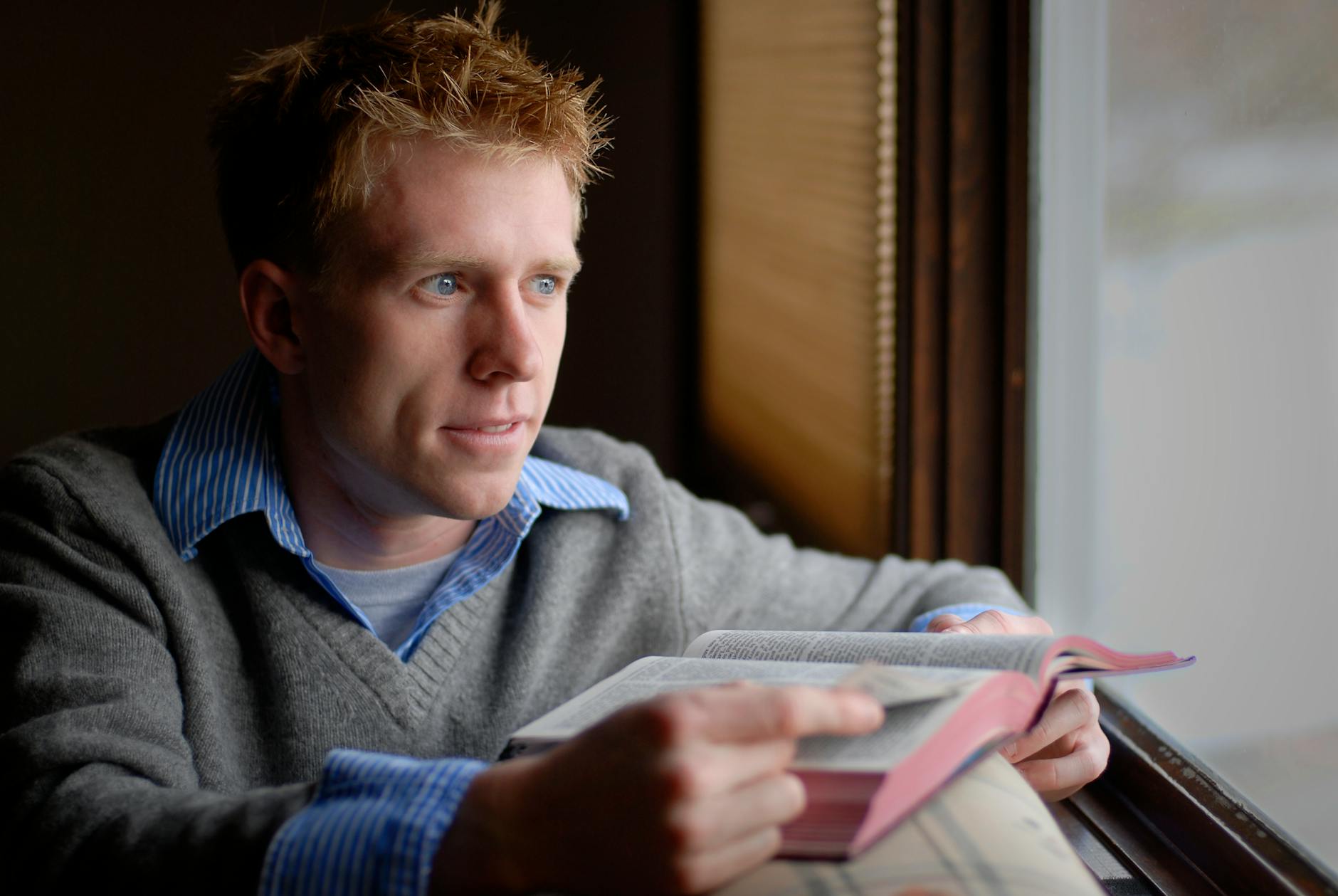
Spiritual growth is one of the key concepts in Christianity. After believing in the person and work of Jesus Christ, it’s imperative that we start growing as Christians to become like Christ. 1 Peter 2:2 says: as newborn babes, desire the pure milk of the word, that you may grow thereby. The way by which we grow is by faithful Bible Study and staying in fellowship with God.
We know all of this, but spiritual growth is hard. We make mistakes and we fall. Slowly but surely we find ourselves on a graphic that goes up and down as we learn to be like Christ. Some may even get stuck in their spiritual growth. Their graphic becomes linear and there is no progress.
What if we could understand, use and apply psychology to forward our spiritual growth? We say spiritual growth as in ‘spirit’ but the mind is fully engaged as our faith is not blind, but it is mindful. Romans 12:2 says: And do not be conformed to this world, but be transformed by the renewing of your mind, that you may prove what is that good and acceptable and perfect will of God.
Neuroplasticity—the discovery that the brain is malleable and changes structure based on experience—was not discovered by one person, but rather evolved from early conceptual work by William James (1890) to groundbreaking research by figures like Michael Merzenich (1960s-70s) and Donald Hebb (1949).
Neuroplasticity gives us a positive goal. If the brain is malleable, that means we will be able to create new networks and if we can restructure the brain, that means we can effectively do Bible Study and come out of the stagnant position. We can overcome getting stuck in any growth for that matter.
So let’s see what psychologists say about this malleable brain. And then we’ll discuss how we can use that to our benefit when it comes to spiritual growth.
The brain works through vast networks of neurons that communicate with one another. As we learn and practice skills, these neural connections become stronger and more efficient. Repeated thoughts and behaviors can develop into habits, allowing us to perform certain tasks more automatically and with less mental effort.
When we encounter something unfamiliar or challenging, the brain must adapt by forming and strengthening new neural connections — a process known as neuroplasticity. This process can feel mentally demanding because the brain is working outside of established patterns. However, moderate challenge and effort are important for learning and growth.
Habits can be helpful because they make actions more efficient, but relying too heavily on familiar patterns can sometimes limit adaptability. If we avoid new challenges or learning experiences, we may become less flexible in how we think and respond to change. Continually learning new skills and perspectives helps keep the brain adaptable and responsive to new demands and environments.
A growth mindset is the belief that abilities and intelligence can be developed through effort, practice, and learning. When we approach challenges with the attitude of “I can’t do this yet,” we remain open to improvement rather than assuming our abilities are fixed. This mindset encourages persistence and supports the brain’s natural ability to adapt and reorganize itself through experience.
Researchers have also studied systems in the brain often referred to as “mirror neuron systems,” which may play a role in learning through observation and imitation. Watching others perform tasks can help us understand actions, develop skills, and become motivated to try new things ourselves.
We can most certainly use the above information from psychologists, to better understand the brain and to apply it to spiritual growth. So let’s see how we are going to do that.
I would like to tie two Scriptures together: 2 Timothy 3:16 and Romans 12:2:
2 Timothy 3:16 says: All Scripture is given by inspiration of God, and is profitable for doctrine, for reproof, for correction, for instruction in righteousness. And Romans 12:2 says: And do not be conformed to this world, but be transformed by the renewing of your mind, that you may prove what is that good and acceptable and perfect will of God.
Spiritual growth is mainly rooted in the continual fellowship with God and the study of His Word. In this particular blog, we will be focusing specifically on the study of His Word.
I used to look at the word ‘Bible Study’ and think: no thanks, I’d rather just read a devotional each day than set myself up to fail. Afterall, the Bible seems so daunting. But devotionals are rather like a snack. If we only eat snacks per day, we will never be filled. Rather, we eat dinner to be fully satisfied. Therefore, careful Bible Study is imperative, yet it does not have to be so difficult.
Let’s look at a few things to remember:
- Make Bible Study easy to begin, but design it in a way that requires thought, reflection and application.
- Do meditate on what you’ve learned
- Repetition is good, but include variation so you are encouraged to continue
- Paraphrase the Scripture so it is easier to understand
- Create a method to memorize Scripture
- Bible Study affects how you think
- Bible Study affects how you feel
- Bible Study affects how you act
How does this promote new networks? By careful Bible Study the brain restructures itself through the new way of learning. This benefits you as a Christian, because this means you will be able to get the most out of Bible Study and in turn, boost your spiritual growth.
So how are we going to study the Bible that is easy to do, but challenging enough to restructure the brain to learn? Here is a solid method:
Think of viewing Scripture from different angles. When you are busy with a book of the Bible, view it in the following angles and write it down.
Angle 1: Historical angle. Read the book of the Bible. What are the historical implications when you look at the history of this book? It will be good to do research online or get a book that analysis the history of a certain book of the Bible.
Angle 2: Literary angle. It focuses on how the authors used literary forms—such as narrative, poetry, metaphor, and structure—to communicate their message.
Angle 3: Theological angle. It interprets the text specifically to understand divine truth—God’s plans, attributes, and relationship with creation—and how those truths apply to faith and life today.
Angle 3: Canonical angle. It’s a method of Bible study that focuses on interpreting a passage based on its final form within the entire collection of the Bible (the canon).
Angle 4: Personal angle. Often referred to as personal application, is the practice of taking timeless biblical truths and identifying how they specifically apply to your own daily life, decisions, character, and circumstances.
Do remember that, as easy as this is, it is going to take time for you to able to do this with confidence. But this Bible Study method will help the brain create new networks.
If you feel like Bible Study is too daunting to approach, follow the method given to you above. I guarantee that it will help you with your spiritual growth.
Leave a Reply